

Lux Trading Firm operates within the proprietary trading space, offering traders access to capital through a structured evaluation and funding model.
Like most firms in this category, it replaces traditional retail trading with a rule-based framework where performance and risk control determine progression.
In a market where many firms appear similar on the surface, differences usually show up in structure rather than promises.
How rules are enforced, how capital access scales, and how traders are expected to operate day to day shape the real experience.
This review looks at what Lux Trading Firm is, how its model typically works, what it emphasizes in practice, and which types of traders are most likely to align with its framework.
What Is Lux Trading Firm?

Lux Trading Firm is a proprietary trading firm that provides traders with access to funded capital once specific performance and risk conditions are met. It does not function as a retail broker, nor does it operate as an investment or signal service.
The firm’s model is based on evaluation-driven access. Traders trade under predefined rules, and successful performance within those limits leads to a funded account relationship where profits are shared according to the firm’s payout structure.
Lux Trading Firm focuses on professional-style trading environments rather than high-frequency onboarding or simplified retail-style access.
How the Lux Trading Firm Model Typically Works
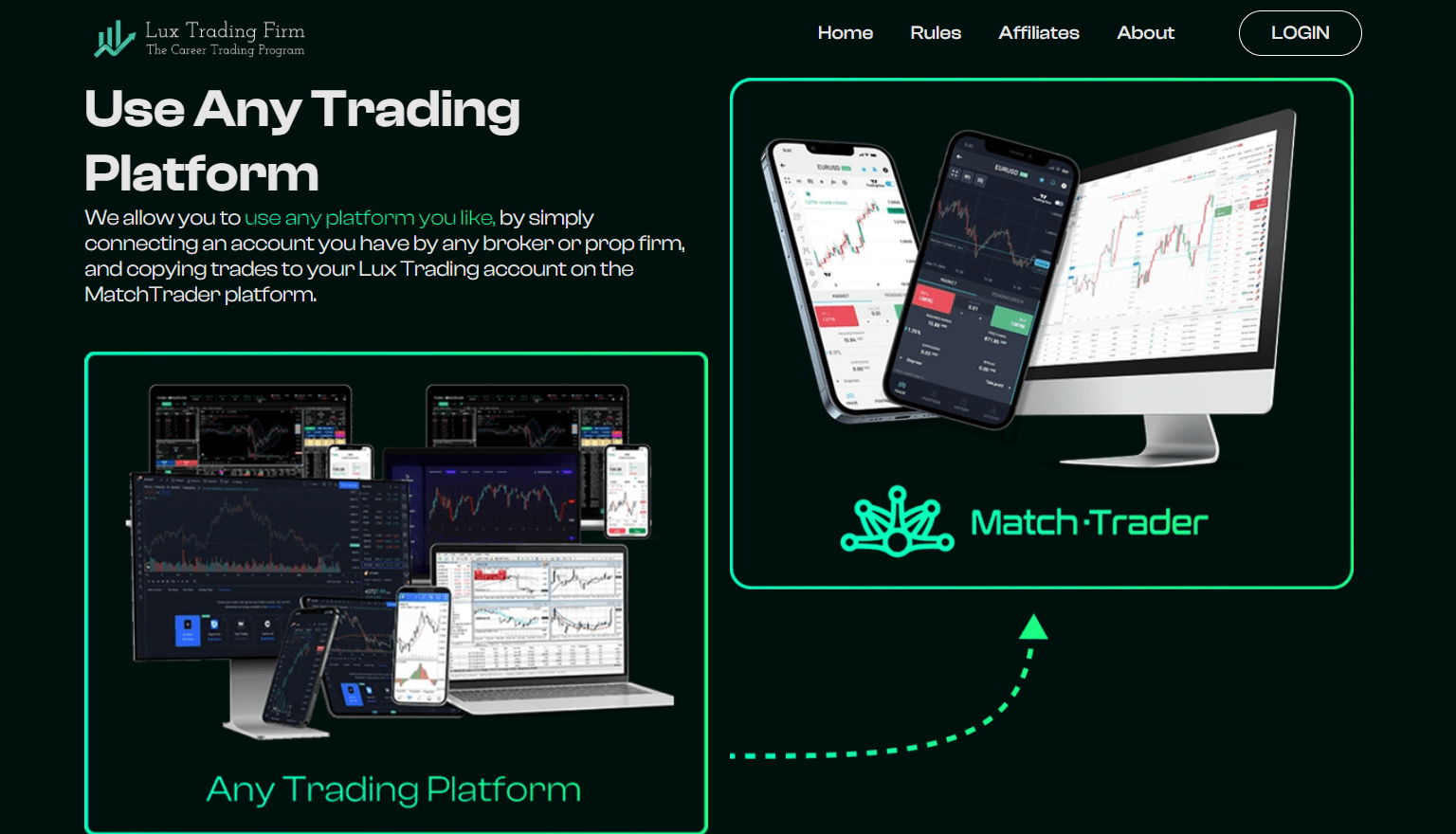
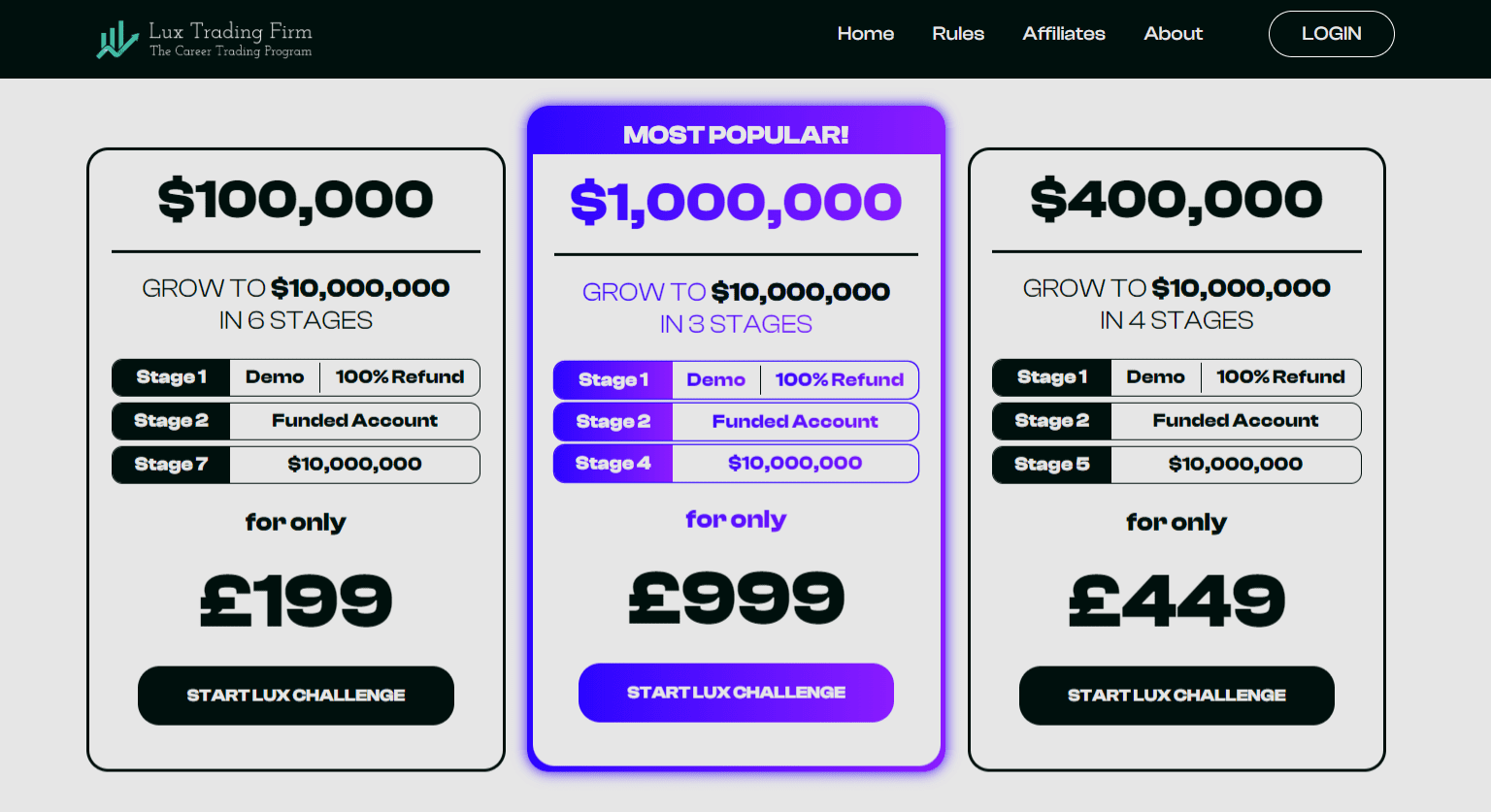
The Lux Trading Firm process begins with a structured evaluation stage. Traders select an account type that defines capital size, risk parameters, and performance targets.
During evaluation, traders aim to reach a profit objective while staying within loss limits and other constraints. The emphasis is on disciplined execution rather than speed.
Rule violations usually result in account termination, while compliant performance allows progression.
Once funded, traders continue operating under a similar rule set. This continuity reduces the need to adjust strategies between stages and reinforces consistent behavior.
Funded accounts are monitored, and payouts are tied to profit-sharing terms rather than fixed salaries or guaranteed returns.
Key Design Priorities in the Trading Experience
Lux Trading Firm’s structure reflects several priorities that influence how traders interact with the platform.
Risk Control and Drawdown Management
Risk boundaries sit at the center of the model. Loss limits and drawdown mechanics are designed to cap downside exposure and discourage excessive leverage.
This structure favors traders who already manage risk carefully and treat capital preservation as a core objective rather than a secondary concern.
Professional Trading Environment
Lux Trading Firm emphasizes a more institutional-style approach compared to simplified retail models. The trading environment is intended to mirror professional expectations, where rules are enforced consistently and performance is evaluated over time.
This can feel supportive to experienced traders, while newer traders may find the structure demanding.
Consistency Over Short-Term Gains
The framework rewards repeatable performance rather than isolated high-return days. Large swings, recovery-style trades, or aggressive scaling can conflict with the firm’s constraints.
As a result, traders who focus on steady execution and controlled sizing tend to experience less friction within the system.
Operational Structure and Oversight
Beyond trading rules, operational clarity plays a role in how Lux Trading Firm is perceived.
Account metrics, rule thresholds, and progression status are typically made visible so traders can track compliance in real time. This transparency helps reduce accidental violations during active market conditions.
Like most prop firms, Lux Trading Firm reserves the right to review activity, particularly around breaches or payout requests. Understanding how these reviews are conducted is an important part of evaluating fit.
Who Lux Trading Firm Is Best Suited For
Lux Trading Firm tends to align best with traders who already understand futures or CFD-style risk mechanics and are comfortable operating within defined limits.
It suits traders who:
- Prefer structured environments
- Trade with controlled position sizing
- Value long-term consistency over rapid scaling
Traders who rely on high-variance strategies or frequent oversized trades may find the rule framework restrictive.
As with most prop firms, success depends less on market prediction and more on disciplined execution.
Positioning Within the Prop Trading Market
Within the broader prop trading landscape, Lux Trading Firm sits among firms that emphasize structure and professional standards rather than accessibility or speed.
It does not attempt to differentiate through aggressive marketing or simplified entry. Instead, its appeal lies in a controlled environment designed to reinforce disciplined trading habits.
This positioning makes it more attractive to traders seeking a professional framework rather than casual exposure to funded trading.
Considerations Before Joining
Before engaging with any prop firm, traders should review rule definitions carefully. Drawdown calculations, breach conditions, payout terms, and scaling policies all affect how a strategy performs over time.
Lux Trading Firm is no exception. Traders benefit most when they treat the evaluation as a compatibility test rather than a challenge to overcome quickly.
Clarity upfront reduces the likelihood of frustration later.
Best Prop Firms in January 2026
Heads up! If you don’t have the time to read and research for weeks to find the best prop firm, then save yourself some hassle.
I personally recommend the prop firms below. They all have excellent reputations with great trader feedback. If any of them do stop being any less than excellent, I will stop recommending them. That’s my promise to you. I only promote great prop firms.
Oh, and we have also managed to negotiate some really great discounts to go with them!
Frequently Asked Questions
Does Lux Trading Firm Offer Instant Funded Accounts?
Access to funded trading typically follows an evaluation process where traders must meet performance targets while respecting risk limits.
Is Lux Trading Firm Suitable for Beginner Traders?
It can be challenging for beginners. The structure is better suited to traders who already understand risk management and rule-based trading environments.
What Causes Most Traders to Fail Evaluations?
Most failures result from breaking risk rules, such as exceeding drawdown limits, rather than from poor trade ideas.
What Should Traders Review Before Starting an Evaluation?
Traders should verify drawdown mechanics, loss limits, payout terms, and how rule enforcement is handled to ensure alignment with their strategy.
Conclusion
Lux Trading Firm operates as a structured proprietary trading firm built around rule-based progression and controlled risk.
Its design prioritizes consistency, discipline, and professional-style execution over speed or aggressive growth.
 Get Started Here
The firm is best suited for traders who already trade with restraint and are comfortable working within clearly defined boundaries. For those traders, Lux Trading Firm offers a framework that mirrors professional expectations found in institutional environments.
As with any prop firm, alignment matters more than appearance. Traders who understand and respect the structure are the ones most likely to find the experience productive.