
Prop trading firms are everywhere these days, but OneUp Trader has been around longer than most – quietly offering futures funding through a streamlined one-step evaluation.
It skips the gamified scaling models and layered verification hoops many newer firms have embraced.
But does this simplicity hold up in today’s market?
In this review, we’ll dive into how OneUp works, its pros and cons, payout structure, platforms, hidden costs, and how it compares to more modern futures prop firms – without the hype.
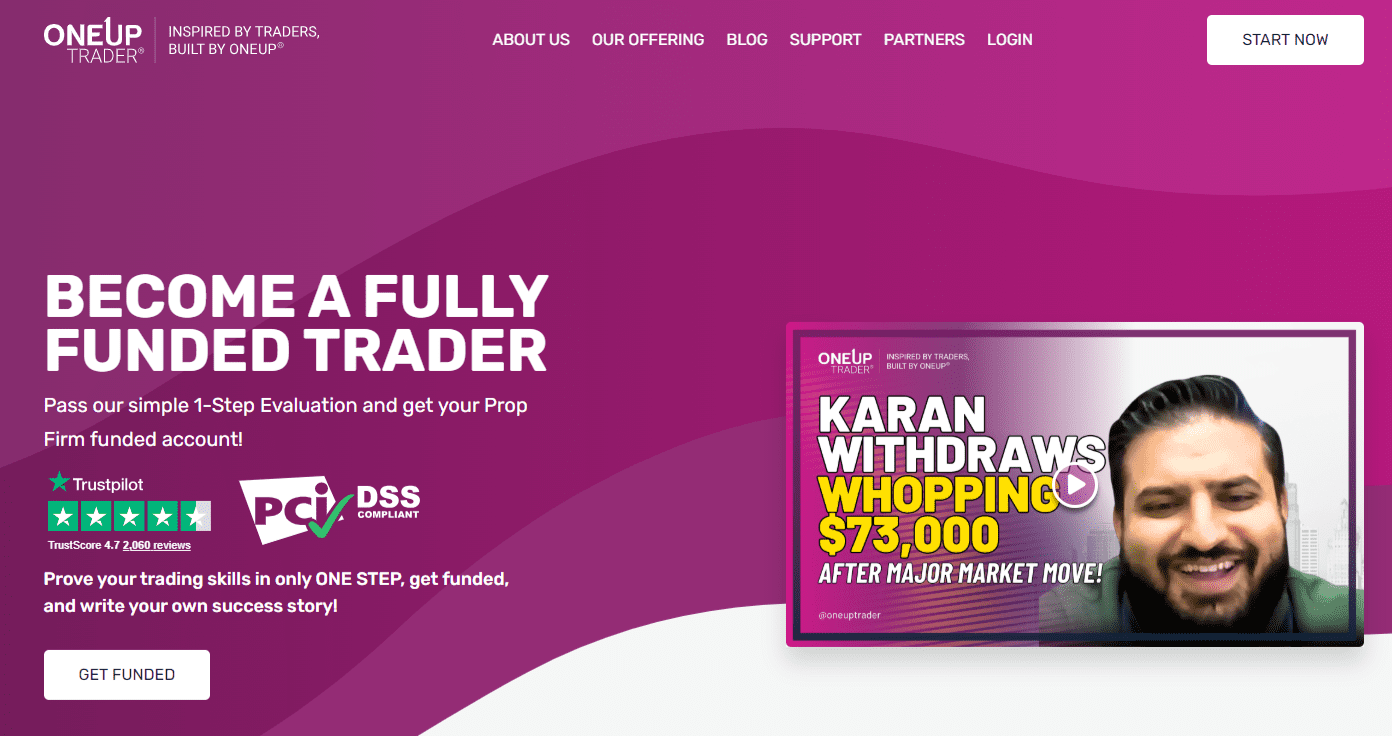
OneUp Trader’s entire model is built around a single-phase evaluation challenge.
This is a live-market simulation where traders must hit a profit target while respecting risk management rules.
There are no resets, no second stages, and no minimum trading days.
You get to choose your account size upfront:
Each account comes with its own daily loss limit and trailing drawdown, which are enforced strictly. If either is breached – even by a cent – your account is disqualified.
There’s no deadline to reach the target, which is a big plus for swing traders or part-timers.
However, you’re billed monthly until you pass, so taking your time can get expensive.
Unlike some newer firms with dynamic drawdowns or adjustable thresholds, OneUp’s rules are simple – and strict. You must:
Trailing drawdown is calculated on your highest end-of-day balance, not real-time equity.
This adds breathing room, but not by much – especially at lower account sizes.
One mistake, and the evaluation ends.
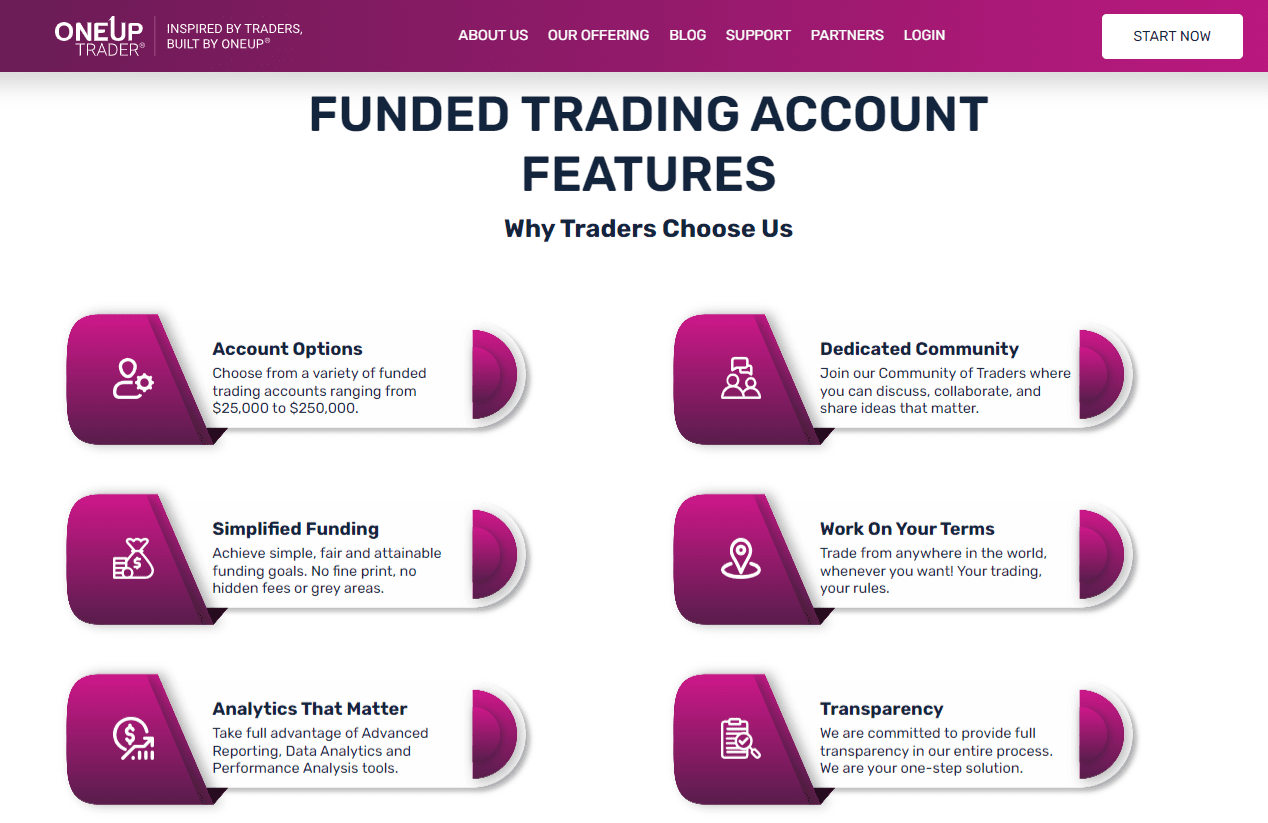
Once you pass, OneUp connects you with a third-party funding partner – typically a firm operating real-money futures accounts.
The exact provider may vary, but historically, OneUp has worked with Helios Trading Partners.
You’ll keep 80% of all profits, with no monthly fee post-funding. However, you can’t withdraw right away.
There’s usually a minimum profit of $1,000 required before your first payout is approved. Once that threshold is hit, withdrawals can be made bi-weekly.
There are no scaling targets, but your account size does not increase over time.
You stay locked into the size you qualified for unless you pay for a new evaluation and pass again at a higher level.
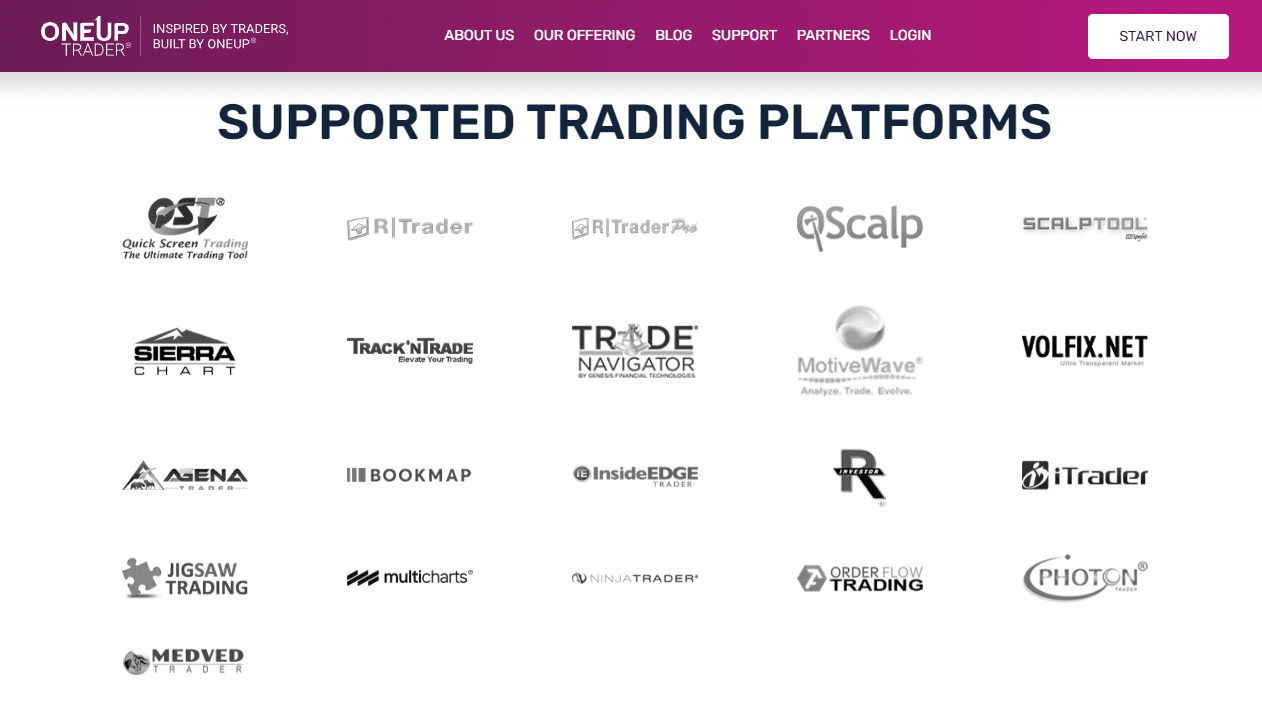
OneUp Trader uses the Rithmic data feed – one of the most stable and widely used feeds for futures trading.
This gives traders access to institutional-grade pricing and execution, but it also means you’re responsible for integrating a compatible platform.
Supported platforms include:
This platform flexibility is ideal for discretionary traders and quants alike, but note that setup is entirely self-managed.
OneUp doesn’t provide handholding or tutorials beyond basic FAQs. You’ll need to be comfortable configuring your own trading environment.
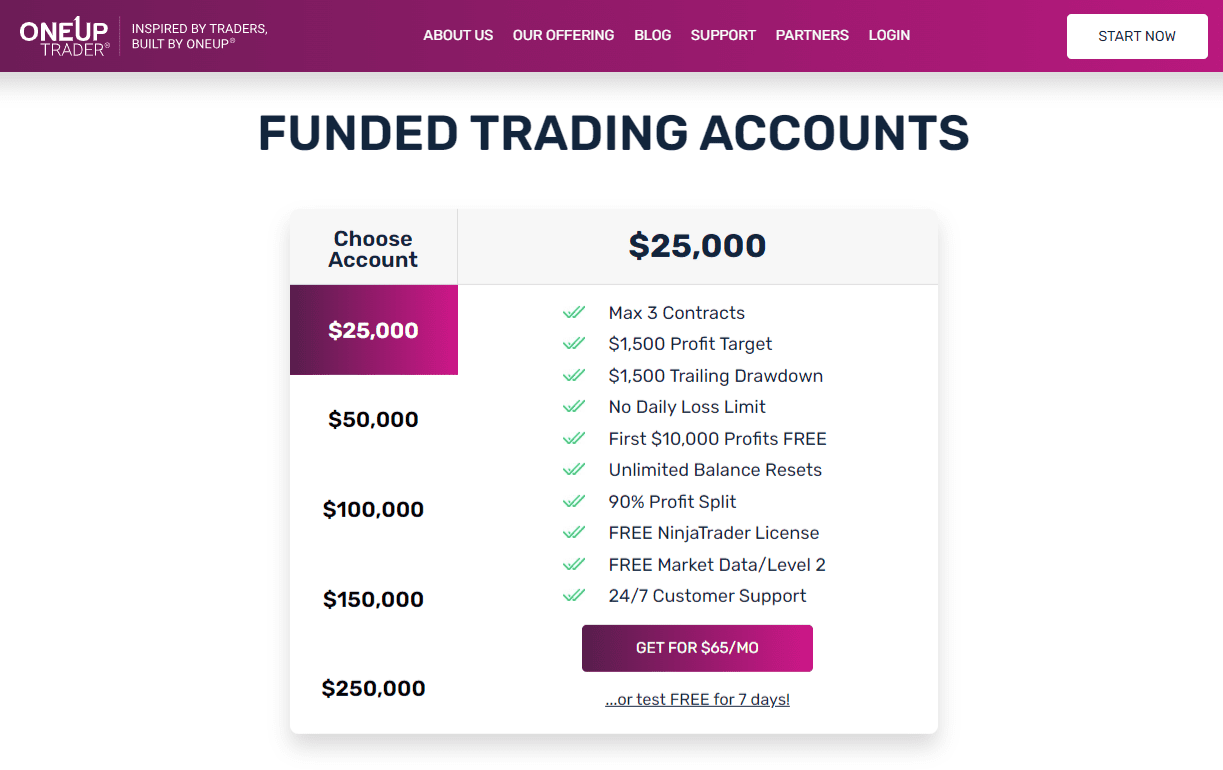
Here’s where OneUp can become costly if you’re not efficient.
The monthly subscription fee depends on your account size:
There are no refunds and no free resets. If you fail, you have to pay again to restart.
Unlike some competitors, OneUp doesn’t offer discount codes or frequent sales.
However, if you’re accessing through an affiliate link, you can often receive a modest discount or rebate.
Also note that once funded, some traders may face data feed charges – depending on the platform they use and whether they qualify as a non-professional trader under CME rules.
Many futures prop firms now offer scaling programs, where profitable traders unlock higher capital after hitting new milestones.
OneUp does not.
There’s no formal growth plan. If you want a bigger account, you have to pass a new evaluation from scratch.
For aggressive traders or long-term capital seekers, this may feel like a ceiling.
However, some traders actually prefer this model. There’s less pressure to constantly perform or maintain aggressive targets just to grow.
The structure stays consistent post-funding, allowing traders to focus purely on strategy – not scaling metrics.
Support is offered via email only – no live chat, no Discord, no direct funding partner communication until after you pass.
That might frustrate some users, especially those used to more interactive models like Tradeify or Apex.
Still, most responses are sent within 24 hours, and onboarding instructions are clear.
OneUp doesn’t try to upsell, cross-sell, or bombard you with emails, which adds to its clean, distraction-free reputation.
OneUp offers minimal educational content.
There are no trader courses, webinars, or content portals. It assumes you know what you’re doing – and just need a capital partner.
That makes it ideal for experienced traders, but potentially alienating for beginners or those looking for handholding.
Yes, algorithmic strategies are permitted, as long as they’re compatible with Rithmic-supported platforms and respect the risk rules.
Most major contracts (ES, NQ, CL, GC, etc.) are supported, but certain exotic or illiquid contracts may be restricted. The platform you’re using will show available markets.
There’s no time limit, but most traders pass in 2–4 weeks. Once passed, funding typically goes live within 2–3 business days.
No. You must complete the evaluation you paid for. If you want a different size, you’ll need to start a new challenge.
OneUp Trader is best suited for independent futures traders who want a clean, no-frills path to funding.
If you already have a strategy, understand how to work within drawdown rules, and want to avoid complicated evaluation structures, OneUp delivers a clear path.
However, it’s not for everyone.
Newer traders may struggle with the lack of guidance, and long-term growth potential is limited due to the lack of a scaling plan.
If you’re confident, disciplined, and looking for a firm that stays out of your way – OneUp is still a solid pick.